“Just Fix Up the Old Houses”: What Rehab Really Costs in Iowa
“Just Fix Up the Old Houses”: What Rehab Really Costs in Iowa - part 4 of 5 in Affordable Housing is Expensive
This post is part of a five-day series I’m running on why affordable housing costs so much to create here in central Iowa, and what that means whether you’re buying, building or just trying to follow your own hometown’s housing conversation. Want the rest of the series without having to go hunting for it? Subscribe to the blog below and I’ll send each new post straight to your inbox as it goes live.
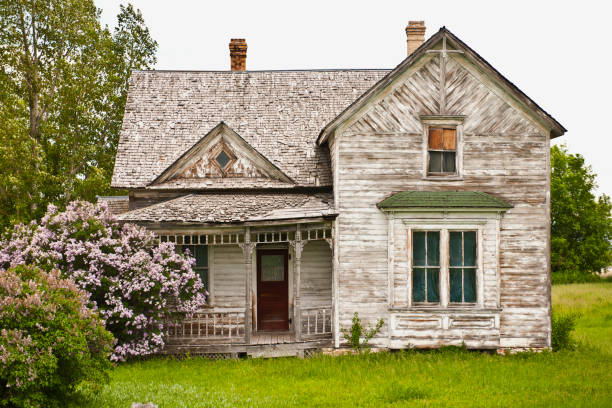
Yesterday we priced out acreage living and found the costs hiding under all that gravel. Today we’re back on Main Street, small town Iowa for the most popular affordable housing idea in every small Iowa town: rehab the old run-down houses in town.. I want to say clearly up front, I love old Iowa houses and I’ve sold hundreds of them. But here’s the honest headline: a full rehab of a run-down older home frequently costs $100 to $200 per square foot, which meets or beats new construction but you inherit every surprise the last century left behind.
Small-town central Iowa is full of solid old bones. Foursquares, bungalows, farmhouses moved to town decades ago. The question isn’t whether they can be saved. It’s what saving them costs and who can afford to do it. Let’s open the walls and look at the costs.
The Hazard Trio: Shingles, Asbestos and Lead
Start at the top. Many neglected houses need a full roof, and old homes often carry two or three layers of shingles that all have to come off and be disposed of. Tear-off plus a new roof on a typical older home commonly runs $12,000 to $25,000 depending on size, pitch and sheeting condition.
Asbestos shows up in almost every house built before roughly 1980, it’s in the siding, the floor tile, the pipe insulation, the vermiculite in the attic, the ceiling tiles, etc. Testing is cheap. Abatement isn’t. Licensed removal can run from a few thousand dollars for a small area to $25,000 or more for a whole-house problem.
Then lead paint. Assume any pre-1978 house has it. Federal RRP rules require certified practices when contractors disturb painted surfaces in these homes, which adds labor cost to every window replacement and every wall you open. It’s manageable, but it’s never free, and it matters double if kids will live there.
Foundations and all the Stuff Below Ground
Central Iowa’s clay soil moves, and hundred-year-old foundations show it. Stone or early concrete block foundations with bowing walls, stair step cracks, water intrusion or settling can cost $10,000 to $40,000 or more to stabilize properly. I’ve watched buyers walk into a $70,000 house and walk out when the foundation bid alone hit $35,000. The purchase price is the cover charge. The foundation is your tab.
Plaster, Wiring and the Walls Themselves
Old plaster is beautiful when it’s sound and miserable when it’s not. Cracked, keyed-out plaster usually means gutting to the studs and all new drywall, which actually has an upside, because you’re gonna need to get in those walls anyway for the wiring.
Knob-and-tube wiring and 60-amp services still hide in a lot of Iowa homes, and many insurers won’t write a policy until they’re gone. A full rewire with a modern 200-amp panel typically runs $10,000 to $25,000 on an older two-story home.
Galvanized plumbing and/or lead pipes often need replacing at the same time. None of it shows in the listing photos but all of it comes before you spend a dime on anything a buyer can actually see.
The Energy Problem
Old houses leak. Balloon framing with empty wall cavities, single-pane windows, uninsulated attics. Bringing an older Iowa home anywhere near modern efficiency, dense-pack insulation, air sealing, new windows, updated HVAC, can add another $20,000 to $50,000. Skip it and the “affordable” house costs its owner $300-plus a month in utilities all winter, which isn’t affordable at all. It’s just cost hiding in the utility bill instead of the mortgage.
Adding It All Up
Say you buy a rough house in a small Hardin or Hamilton County town for $80,000. Roof, foundation work, rewire, plumbing, insulation, kitchen, bath, flooring, paint: a genuine full rehab lands somewhere between $100,000 and $200,000 depending on scope. You’re now at $180,000 to $280,000 for a house that still has 100-year-old framing, and you spent a year of your life managing it. Sometimes that’s absolutely worth doing, especially where new construction isn’t coming. But it’s not the‘“affordable” shortcut people imagine when they say “just fix up the old houses.” It’s a second full price tag stacked on the first one.
Quick Questions I Hear All the Time
How much does it cost to rehab an old house in Iowa?
A full rehab of a neglected older home generally runs $100 to $200 per square foot depending on condition and scope, often rivaling new construction cost.
Is it worth buying a fixer-upper in a small Iowa town?
It can be, especially where nobody’s building new. But get bids on the roof, foundation, electrical and plumbing before you commit, because those four categories sink more rehab budgets than kitchens ever will.
Do old Iowa houses have asbestos and lead paint?
Most pre-1978 homes have lead paint and many pre-1980 homes contain asbestos somewhere. Testing is inexpensive. Budget for certified handling before you open walls.
Tomorrow: the finale, tiny homes, modular, manufactured, 3D printed and shared living. The alternatives everybody asks about, what each one honestly offers and where I land after all five days.
Share this article
Subscribe to our blog
Get Central Iowa market updates, neighborhood guides, and buying and selling tips as we publish them.
Written by Brandi Nelson · Nelson Real Estate Team at CENTURY 21® Signature Real Estate